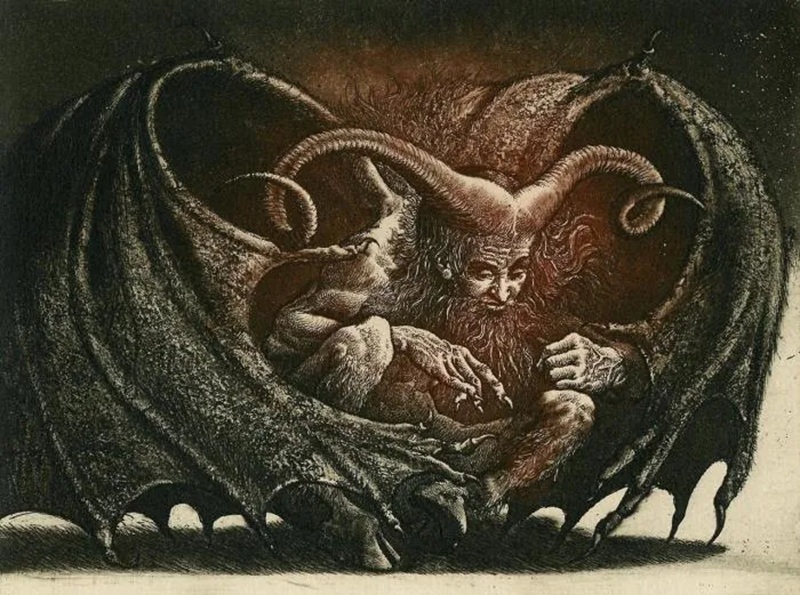
Azazel, a fallen angel mentioned in ancient texts, is a complex figure embodying both enlightenment and corruption. Known as the “Demon of the Desert,” Azazel’s name is closely tied to the scapegoat ritual described in the Book of Leviticus. During this ritual, one goat was sacrificed, while another was sent into the wilderness, symbolically carrying the sins of the people. This second goat, thought to be taken by Azazel, gave rise to the term “scapegoat.” Myths suggest that under Azazel’s influence, these goats became sinister beings, carrying out his will.
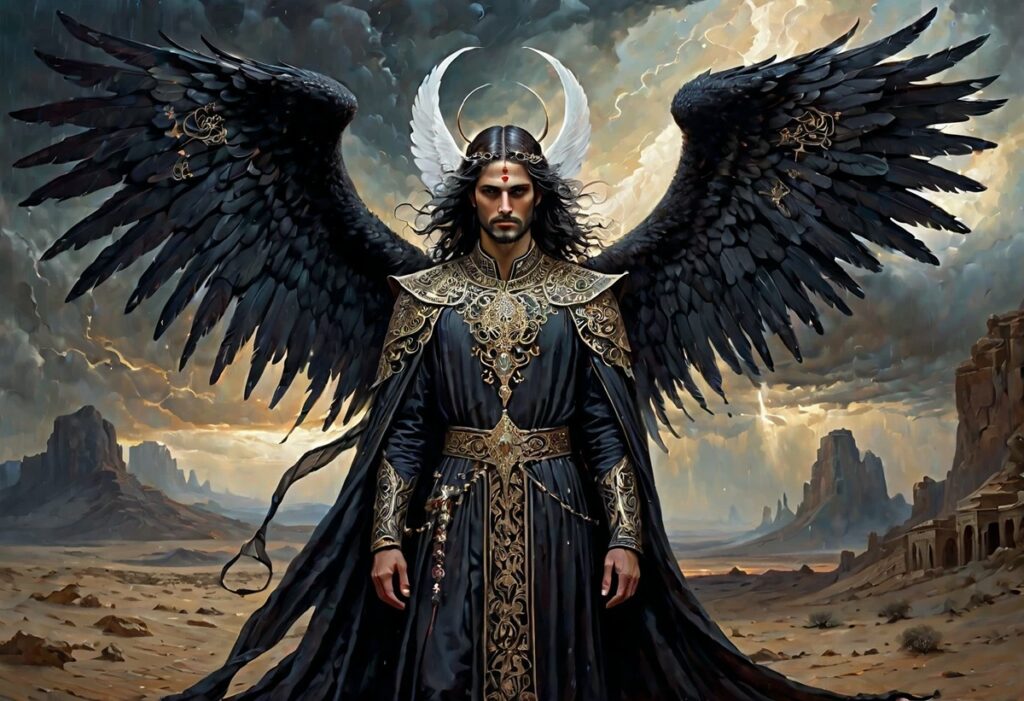
Azazel’s story, elaborated in the Book of Enoch, portrays him as a teacher of forbidden knowledge. He introduced humans to metallurgy, weapon-making, and adornments like jewelry and cosmetics, which, while beneficial, led to vice and corruption. Weapons fueled violence, and cosmetics became tools of seduction, transforming his gifts into sources of sin. Azazel’s teachings, though enlightening, came at a cost, plunging humanity into betrayal, murder, and debauchery.
Azazel’s defiance of God marked his fall. Refusing to bow before Adam, he was cast down by the archangels, his wings severed by Raphael. Imprisoned in a rock in the desert, Azazel eventually escaped, using his powers to manipulate minds and incite chaos. He assumed human forms, seduced women, and fathered a race of half-demon offspring, intending to create a demonic legion. However, his plans were thwarted by divine intervention.
In medieval lore, Azazel was seen as a demon who could grant wishes, though his gifts often came with dire consequences. Despite his dark nature, Azazel’s narrative parallels figures like Prometheus, who also shared forbidden knowledge with humanity. Yet, unlike Prometheus, Azazel’s gifts brought both enlightenment and ruin, embodying the duality of light and shadow. His story serves as a cautionary tale of the price of knowledge and the thin line between progress and corruption.