History, they say, is written by the victors. But what happens when those victors have a vested interest in keeping inconvenient chapters locked away? The Inquisition, one of Europe’s darkest and most controversial periods, remains shrouded in silence. Beneath the veneer of religious zealotry, what unsettling truths have been buried? Why do the Church and historians seem reluctant to fully unearth the past?
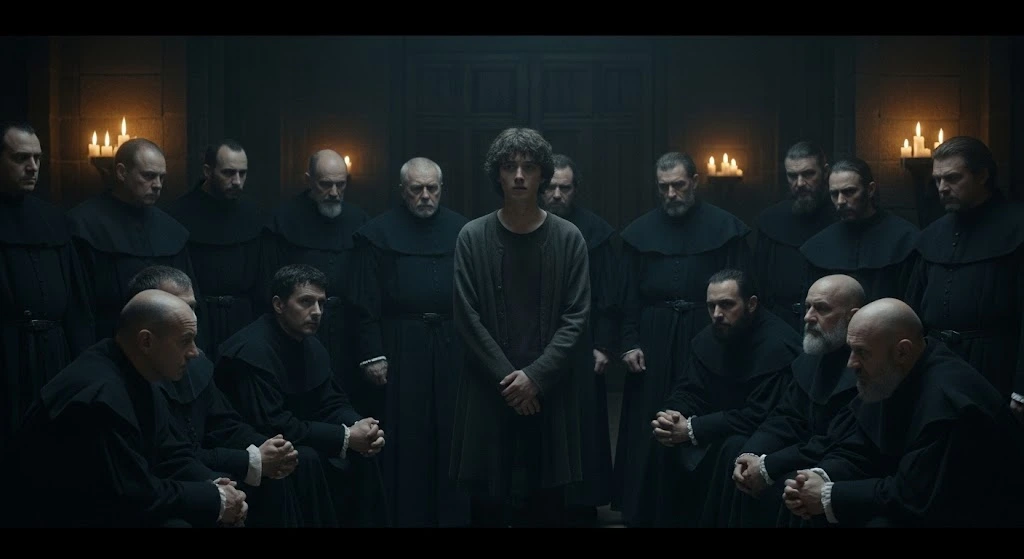
When the Church Became a Superpower: A Silent Takeover
In medieval Europe, the Catholic Church transitioned from a spiritual institution to a political titan. Through slow, calculated efforts, the Church amassed wealth, land, and power, while commanding armies and influencing kings and commoners alike. This transformation wasn’t a public spectacle but a covert and strategic accumulation of control. The Church’s rise was built on a foundation of compulsory tithes, indulgences, and the suppression of inconvenient truths.
Central to this power was the Inquisition, a machinery designed to suppress dissent and consolidate control, masked under the guise of religious justice.
The Inquisition: Justice or Religious Terror?
The Inquisition is often portrayed as a necessary institution to rid the world of heresy and enforce religious orthodoxy. However, behind this facade lay a brutal system of torture and terror. The Spanish Inquisition, the most notorious of all, functioned with chilling efficiency. Accusations were made without evidence, and trials were marked by torture and forced confessions. Those accused had no legal representation and were denied knowledge of their accusers. Torture wasn’t incidental; it was the backbone of the system.
In dungeons, victims endured unimaginable suffering. Waterboarding, thumbscrews, iron boots, and burning coals became daily realities. The screams of the tortured were the true soundtrack of the Inquisition.
Hidden Truths: The Church’s Silent Agenda
The official story masks a far darker truth. The auto-da-fé—the public burning of heretics—was a spectacle meant to display divine retribution. Yet, this ritual was often about much more than faith; it was about power. Those who confessed, even under duress, faced confiscation of their property and a life of public humiliation. Even the dead weren’t spared; bodies were exhumed, put on trial, and burned, further terrorizing the living.
Beyond the flames, the Inquisition was a war on knowledge. Books that challenged the Church’s authority were banned, burned, and their authors often executed. The Index Librorum Prohibitorum cataloged these forbidden texts, enforcing a climate of self-censorship.
Unseen Abuses: The Darker Side of Control
While burning heretics is the most iconic image of the Inquisition, far more insidious practices remained hidden. Intellectual persecution stifled artistic and scientific progress, as songs, plays, and even letters could be grounds for accusations. The Inquisition cultivated an atmosphere of fear where individuals dared not express unique thoughts for fear of being betrayed by an informant. Intellectual curiosity was forced underground, and true inquiry was stifled for centuries.
Accusations were often financially motivated. Wealthy individuals or entire communities were targeted for their property, which the Church would seize. Social ostracism was another tool in the Inquisition’s arsenal, destroying reputations and lives in one fell swoop.
The Inquisition also targeted “deviant” lifestyles—sodomites, bigamists, and Freemasons were often accused and subjected to the same brutal treatment as heretics. The Church used the Inquisition not just to safeguard theology but to control society itself.
The Church’s Control Over Narrative and Knowledge
One of the most insidious aspects of the Inquisition was the Church’s control over the narrative. Not only did the Church silence dissenters, but it also controlled knowledge. The Vatican Library, one of the world’s largest and most secretive, held vast amounts of manuscripts, scientific works, and theological texts—many of which contradicted Church teachings. While the masses were kept in ignorance, the Church hoarded this knowledge, maintaining control over both the spiritual and intellectual spheres.
Parallels with the Modern World
The mechanisms of control used by the Inquisition may seem distant, but the parallels with modern-day society are deeply unsettling. Today, science, media, and digital platforms often dictate the narrative. Like the Church of the 16th century, powerful institutions seek to control what we know, what we believe, and how we think.
Back then, dissenting voices were executed or burned. Today, they are deplatformed, demonetized, or branded as a threat to public safety. Censorship, once an act of burning books, is now an algorithmic process of burying inconvenient ideas.
The Psychology of Sin and Control
At the heart of the Inquisition’s power was the Church’s manipulation of guilt. By institutionalizing the concept of sin, the Church created an emotional cycle of dependence. Confession, absolution, and penance became a loop of emotional and spiritual control. Guilt suppressed joy and motivation, making people feel unworthy, constantly in need of redemption.
Saints Who Slaughtered: A Moral Contradiction
Even those venerated as saints weren’t exempt from the Church’s violent legacy. Francis Xavier, a revered missionary, orchestrated the mass killing of thousands in India who refused to convert to Christianity. Today, his relics are enshrined and celebrated, despite the bloody history associated with his name. How does the Church reconcile such actions with its teachings of peace?
The Dutch Holocaust: A Genocide Forgotten
The Inquisition in the Netherlands is one of history’s most overlooked genocides. Beginning in 1525 under Emperor Charles V, over 100,000 people were executed for refusing to attend Catholic mass or for reading the “wrong” books. In 1563, the entire population was declared “heretics” and sentenced to die. This genocide has been largely ignored in mainstream historical accounts.
What Did the Church Conceal?
What was the Church truly hiding? Was it merely enforcing religious conformity, or was there a deeper agenda at play? The brutal system of control—through torture, execution, and censorship—was likely aimed at preserving the Church’s authority. Historians often gloss over these details, and many records remain sealed. Could the Inquisition have been a desperate attempt not just to maintain spiritual control but to hoard historical truths, scientific knowledge, or theological contradictions?
The True Legacy: A Warning from the Past
The Inquisition was more than just a religious tribunal. It was a carefully constructed system of control over bodies, minds, and society. It was a terrifying warning against questioning authority—whether in the form of the Church or any other institution. As we look back at this dark period, we must ask: have we truly moved past it, or are we merely living in the shadows of its legacy?