Throughout history, several authors have explored the realms of magic, alchemy, and spiritualism, viewing their literary works as genuine spells. Among them is August Strindberg, the Swedish playwright, who was fascinated by hermeticism and alchemy, often experimenting in his personal laboratory to create gold.
Giordano Bruno, a Renaissance philosopher and scientist, believed in the mystical Egyptian cosmology. He argued for the reform of religion through magical incantations and was executed for his controversial views, which intertwined science and the occult. His writings reflected dialogues and debates on celestial influences, proposing that the universe possesses consciousness.
Another notable figure is Vladimir Odoevsky, often referred to as the “Russian Faust.” He was deeply immersed in alchemical practices and mystical themes, incorporating spirits and animated dolls into his narratives. His work “Sylphide” illustrates kabbalistic rituals aimed at transcending earthly love, showcasing his commitment to blending realism with the mystical.
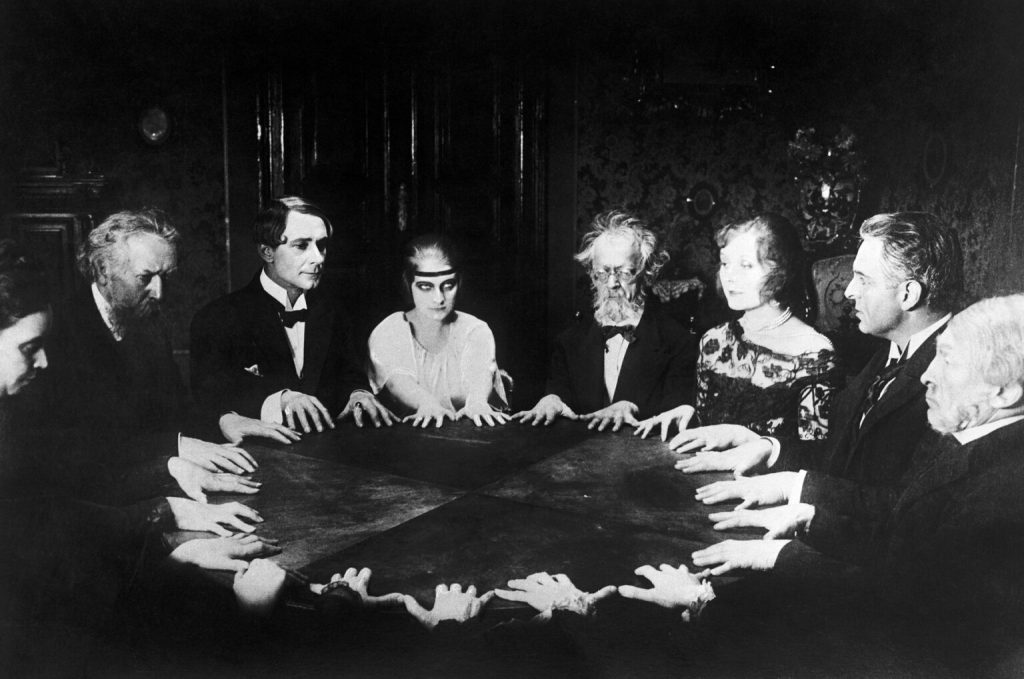
William Butler Yeats, a modernist poet and Nobel laureate, co-founded a Hermetic Society and engaged in spiritualistic sessions with his wife. His fascination with alchemy and Enochian magic led him to invoke angels, and his poetry often reflects complex symbols and mythological themes, emphasizing the connection between reality and legend.
Lastly, Gustav Meyrink, influenced by Helena Blavatsky, faced imprisonment for his mystical beliefs. He turned to writing after losing his banking job and explored paranormal phenomena, alchemy, and yoga for healing. His works, such as “The Golem,” incorporate Kabbalistic lore and reflect his journey from occultism to Buddhism, while still retaining esoteric elements.
These authors illustrate the profound impact of mystical beliefs on literature, merging the worlds of magic and storytelling in their quest for deeper understanding.